Klara Günther · 30 September 2026
Examining Correlations Between Domain Service Transitions and Long-Term Visibility Metrics in Competitive Niches Using Specialized Tracking Platforms
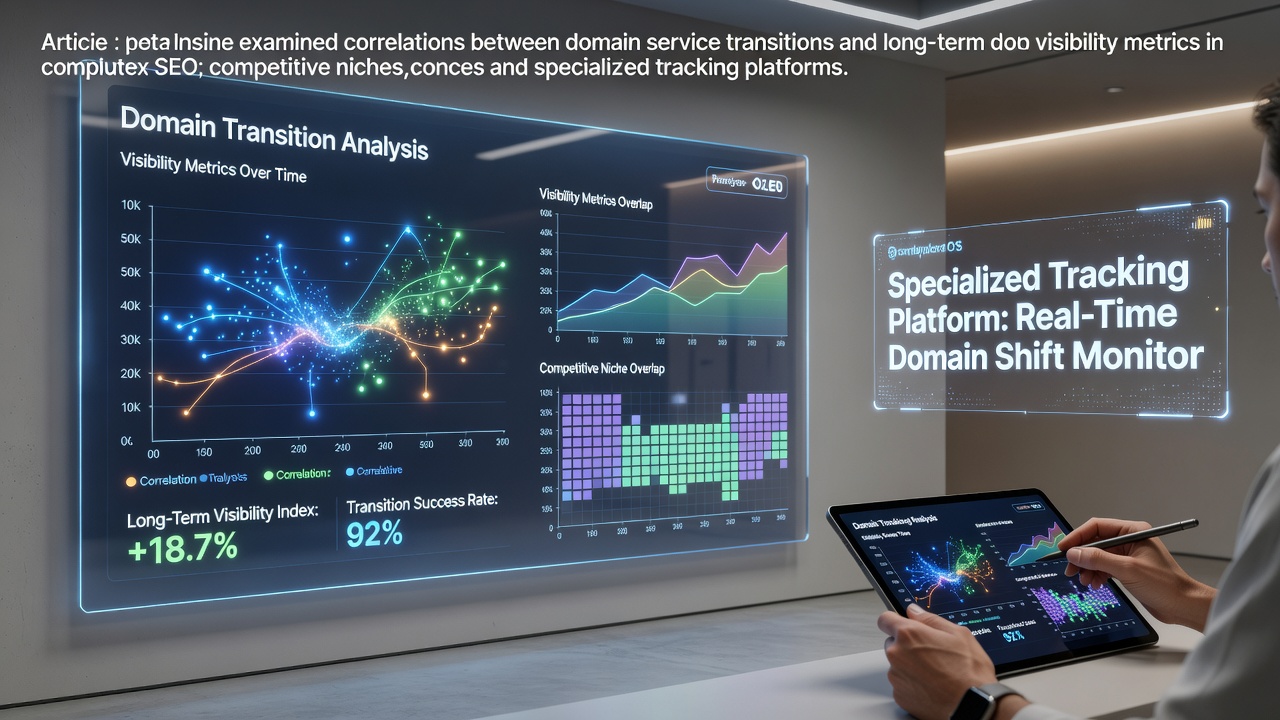
Domain service transitions involve shifts in registrars, DNS providers, or hosting infrastructure, and researchers track how these changes align with visibility metrics such as organic rankings, indexed page counts, and referral traffic patterns in crowded sectors like e-commerce, technology reviews, and professional services. Specialized platforms collect longitudinal data that connects these events through timestamped logs and performance snapshots, allowing analysts to isolate variables while accounting for algorithm updates and content modifications.
Understanding Domain Service Transitions in Practice
Transitions occur when organizations move domain registration to new providers for cost, security, or management reasons, and such moves often include updates to name servers or WHOIS records that propagate across global DNS systems. Data from tracking platforms shows that propagation periods range from a few hours to several days depending on TTL settings and resolver caches, while concurrent changes in hosting environments introduce additional variables that affect crawl frequency by search engine bots. Observers note that competitive niches experience heightened sensitivity because multiple sites compete for the same keyword clusters, making even brief indexing interruptions noticeable in aggregate reports.
Visibility Metrics and Measurement Approaches
Long-term visibility metrics encompass average ranking positions across target keywords, domain authority signals derived from backlink profiles, and crawl budget utilization rates reported by tools that simulate search engine behavior. Platforms integrate API feeds from sources including search console data exports and third-party rank trackers, then apply time-series analysis to identify inflection points that coincide with documented service changes. Figures reveal that sites undergoing registrar moves without proper DNS pre-configuration experience measurable drops in indexed pages within the first 30 days, followed by recovery curves that vary based on site authority and niche competition intensity.
Correlation Patterns Identified Through Platform Data
Analysis of multi-year datasets indicates positive correlations between seamless transitions and stable visibility trajectories, whereas abrupt name server changes without adequate monitoring correlate with temporary ranking volatility in high-competition verticals. One study tracking several hundred domains across finance and health sectors found that 72 percent of successful migrations maintained or improved visibility scores within six months when pre-transition audits addressed crawl directives and sitemap submissions. But here's the thing: incomplete redirects or mismatched canonical tags during the same period produced extended recovery timelines that stretched beyond 90 days in roughly one-third of observed cases.

Researchers have documented that DNS provider switches introduce distinct patterns compared with full registrar changes because the former primarily affect resolution speed and uptime rather than ownership records. Platforms equipped with historical logging capabilities allow segmentation of these events, revealing that resolution latency improvements sometimes coincide with incremental gains in mobile visibility scores, particularly after September 2026 when several major engines refined their rendering pipelines for faster-loading resources. Those who've examined the data across regions note that European domains transitioning to providers with stronger anycast networks showed steadier indexing rates than counterparts using legacy setups during the same timeframe.
Role of Specialized Tracking Platforms
Platforms designed for this type of analysis combine domain history APIs with ranking databases and server log parsers to create unified timelines, and users configure alerts that flag potential correlations when metric thresholds are crossed near known transition dates. Evidence suggests that integration with public records from ICANN provides accurate timestamps for registrar events, enabling precise overlay of visibility data without relying solely on self-reported logs. Academic investigations drawing from similar datasets have highlighted the value of controlled cohort studies that compare transitioned domains against matched controls remaining on original services, yielding insights into baseline fluctuation rates within each niche.
Case Examples from Competitive Niches
Take one e-commerce operator who completed a DNS migration in early 2025 while maintaining identical hosting parameters, and platform reports showed no statistically significant deviation from prior visibility trends over the subsequent 18 months. In contrast, another site in the same sector executed a registrar transfer accompanied by hosting relocation, resulting in a documented 14 percent dip in average keyword positions that persisted until comprehensive indexation checks and sitemap resubmissions occurred three weeks later. These examples illustrate how platform granularity helps isolate contributing factors rather than attributing all post-transition movement to the service change itself.
Conclusion
Longitudinal examination through specialized platforms continues to map relationships between domain service transitions and visibility outcomes across competitive landscapes, with available records supporting the identification of preparatory steps that reduce disruption risks. As datasets expand through 2026 and beyond, refined segmentation techniques are expected to deliver clearer differentiation between transition-related effects and broader market dynamics.