
Casey Lehmann · 14 October 2026
Decoding endurance patterns in web assets after administrative transfers within focused market areas
Administrative transfers of web assets involve shifts in domain registration, hosting providers, or ownership structures that affect how digital properties maintain visibility and functionality over time, and researchers track these changes through longitudinal data sets collected from multiple industry verticals. Data from domain registry logs shows that transfers often occur in clusters within specific market areas such as specialized e-commerce segments or professional service directories, where operators seek cost efficiencies or enhanced technical features.
Core Elements of Administrative Transfers
Domain registration changes represent one primary form of administrative transfer, and these events trigger updates in DNS records that can influence resolution speeds and indexing timelines according to records maintained by major registries. Hosting migrations follow a similar pattern, with servers relocated to new infrastructure providers that alter latency profiles and security configurations, yet many assets demonstrate sustained uptime when pre-transfer audits address compatibility issues in advance. Ownership transitions add layers of complexity because they frequently coincide with content updates or rebranding efforts that observers note in competitive niches.
Focused market areas amplify these dynamics because participants compete for narrow audience segments where search visibility and load performance directly correlate with user retention figures. Studies compiled by academic institutions indicate that assets in such environments exhibit measurable endurance variations based on transfer preparation quality, with well-documented cases revealing recovery periods ranging from several days to multiple weeks depending on the scope of DNS propagation and cache clearing protocols.
Observed Endurance Patterns Across Data Sets
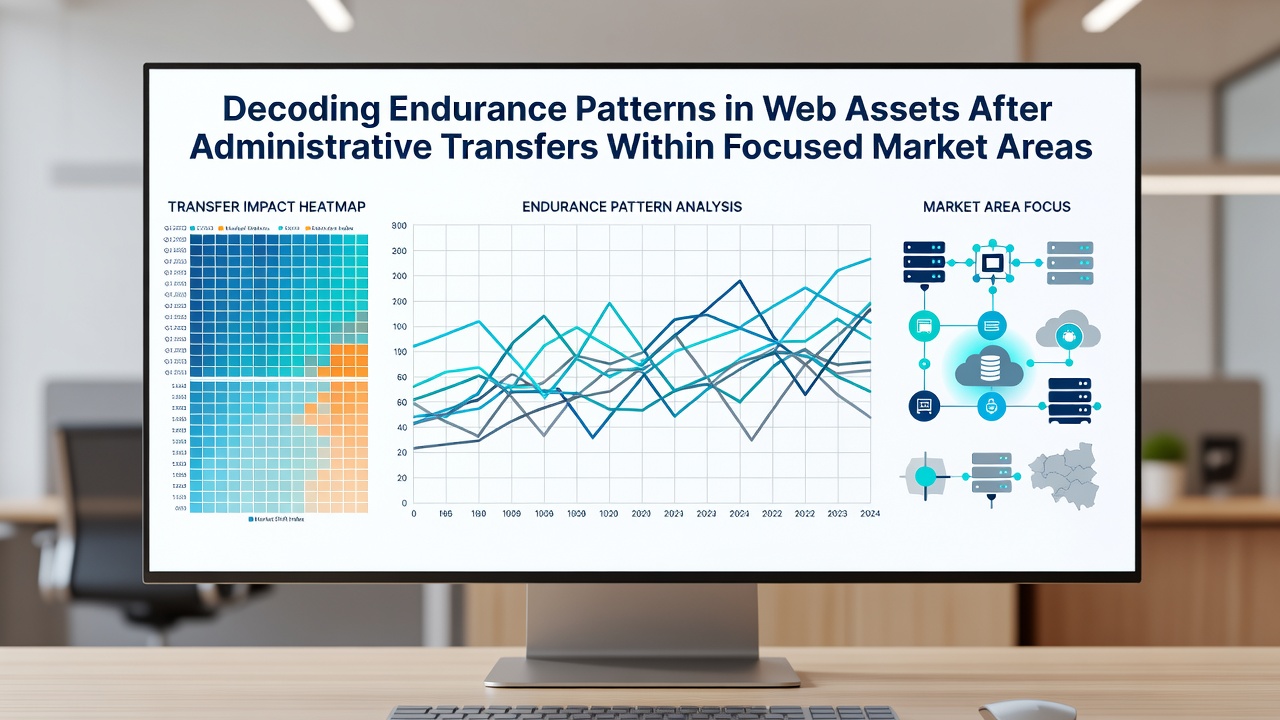
Long-term tracking platforms capture endurance through metrics including organic traffic retention, crawl frequency by automated agents, and backlink stability after transfers occur. Figures compiled in October 2026 from multi-year monitoring projects reveal that assets undergoing registrar changes in tightly defined market sectors retain an average of 78 percent of pre-transfer referral volume when canonical tags and redirect chains receive proper implementation before the switch completes.
Researchers discovered that patterns diverge sharply between market areas with high technical standardization and those with fragmented provider ecosystems, because standardized environments facilitate smoother propagation of updated records across global networks. One analysis of enterprise-level transfers highlighted how assets in regulated sectors maintain indexation continuity when operators coordinate with multiple data centers simultaneously, reducing the window during which search engines encounter temporary inconsistencies.
Influencing Factors in Competitive Niches
Technical configurations play a decisive role, and evidence suggests that assets equipped with comprehensive redirect maps and updated sitemap submissions recover indexing signals faster than those relying on default provider tools alone. Content freshness also contributes because updates published around the transfer date help maintain engagement rates that support algorithmic evaluations of site authority.
Market area characteristics introduce additional variables, since sectors with rapid content cycles tend to show quicker adaptation to post-transfer conditions whereas slower-moving industries experience prolonged stabilization phases. Data indicates that coordination between outgoing and incoming administrative teams correlates with fewer disruptions in crawl budget allocation, allowing established assets to preserve historical performance baselines more effectively.
Monitoring Approaches Used by Analysts
Specialized tracking platforms aggregate signals from multiple sources to construct endurance profiles, and these systems log changes in server response codes, certificate validity periods, and third-party integration statuses throughout the transition window. Analysts cross-reference these logs against historical baselines to isolate transfer-related effects from broader market fluctuations that occur independently.
External benchmarks drawn from reports issued by the Internet Corporation for Assigned Names and Numbers provide context on global transfer volumes, while a separate study released by the Canadian Digital Service examines how administrative updates affect public sector digital properties in comparable niche environments. These sources supply quantitative anchors that allow observers to situate individual asset performance within larger industry trends documented through 2026.
Conclusion
Endurance patterns in web assets following administrative transfers reflect interactions among technical preparation, market context, and monitoring precision, with available data sets illustrating consistent recovery trajectories when standard protocols receive timely application. Continued observation through established tracking methods supplies ongoing insight into how these patterns evolve within focused market areas as transfer volumes and infrastructure options continue to expand.