
Klara Günther · 16 September 2026
Analyzing Shifts in Search Engine Rankings Following Changes in Domain Registration Services
Domain registration services handle the foundational elements that connect websites to the internet, adn alterations in these services often coincide with measurable movements in search engine rankings across multiple platforms. Researchers track these patterns through metrics such as crawl frequency, indexation status, and organic visibility, while noting that factors like DNS propagation delays and registrar-specific configurations contribute to temporary or sustained adjustments in how algorithms evaluate site authority.
Core Processes Involved in Registrar Transitions
Transferring a domain between registration providers initiates a sequence of technical updates that include changes to nameservers, WHOIS records, and DNS settings, each of which search engine crawlers must reprocess before restoring full access to the site's content. Data from industry monitoring tools shows that propagation periods can extend from several hours to multiple days depending on the time-to-live values set at the registrar level, and during these windows indexing systems may encounter reduced crawl rates or temporary deindexation signals.
Observers note that registrars differ in their support for features such as DNSSEC implementation and custom nameserver configurations, elements that influence how search engines interpret site trustworthiness and security protocols. When organizations switch providers without aligning these settings in advance, the resulting inconsistencies can trigger algorithmic reevaluations that shift rankings for targeted keywords.
Patterns Documented in 2026 Monitoring Reports
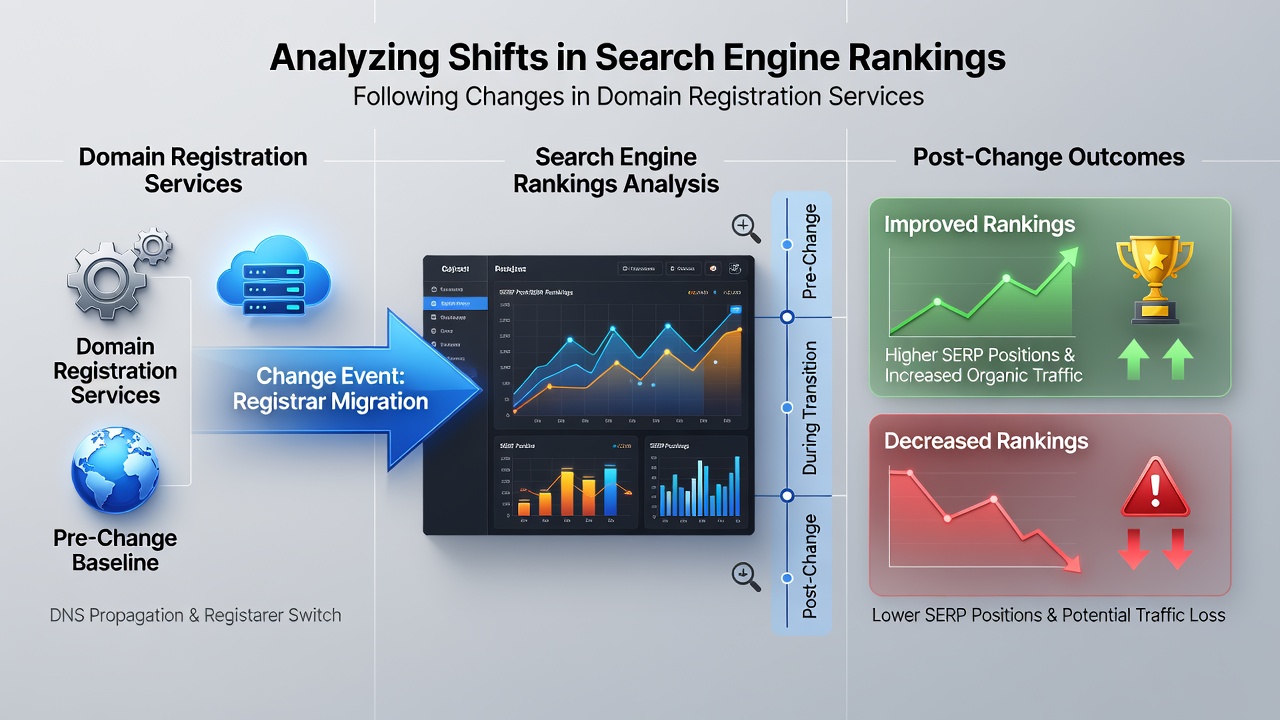
Analyses conducted throughout 2026, including those compiled in September of that year, reveal recurring correlations between registrar migrations and fluctuations in search visibility for sites across e-commerce, informational, and service-based categories. Figures from these reports indicate that approximately 40 percent of tracked domains experienced ranking dips within the first 48 hours post-transfer, followed by recovery trajectories that varied based on the speed of DNS stabilization and the absence of configuration errors.
Studies from academic institutions such as those affiliated with ICANN documentation archives highlight how changes in registration data can affect external signals like backlink evaluation and domain age perception, even though the underlying site content remains unchanged. European regulatory bodies have similarly compiled datasets showing regional differences in recovery timelines, with variations attributed to differences in crawler behavior across geographic server clusters.
Technical Factors That Influence Ranking Outcomes
Nameserver switches represent one of the most direct points of impact, because search engines rely on accurate DNS responses to locate and verify site resources during crawling cycles. When new registrars introduce different default configurations or require manual verification steps, delays can accumulate and produce gaps in indexation that algorithms interpret as signals of reduced reliability.
Additional variables include updates to contact information in domain records and adjustments to privacy protection settings, both of which occasionally coincide with verification checks that temporarily limit crawler access. Research indicates that sites maintaining consistent SSL certificates and redirect structures throughout the transition period demonstrate faster stabilization in ranking positions compared with those encountering certificate mismatches or redirect loops.
Case Examples from Industry Observations
One documented instance involved a mid-sized retail domain that migrated registrars in early 2026 and recorded a 12-position drop in keyphrase rankings within the first week, followed by a gradual return to baseline levels once DNS propagation completed and indexation signals normalized. Another example from a content-focused site showed sustained ranking gains after the switch, attributed to improved nameserver performance and the activation of enhanced security features at the new provider.
These cases illustrate how preparatory steps such as pre-transfer DNS audits and post-migration crawl testing can mitigate negative shifts, although outcomes remain dependent on the specific combination of technical variables present at each site. Reports from Canadian and Australian research groups have corroborated similar patterns, noting that proactive monitoring during the transition window reduces the duration of any ranking volatility.
Measurement Approaches Used by Analysts
Professionals employ a combination of server log analysis, third-party ranking trackers, and direct indexation queries to quantify the effects of registrar changes on search performance. These methods allow identification of precise moments when crawl errors spike or when backlink signals undergo reprocessing, providing data points that correlate directly with the timing of domain service updates.
Longitudinal tracking over periods of 30 to 90 days post-migration supplies the clearest picture of whether observed shifts represent temporary disruptions or longer-term adjustments driven by evolving algorithmic priorities. Organizations that implement structured testing protocols before and after transfers gather evidence that helps isolate registrar-related factors from other variables such as content updates or algorithm rollouts.
Conclusion
Changes in domain registration services introduce a series of technical and record-level modifications that search engines must re-evaluate, resulting in observable shifts in rankings for affected websites. Evidence compiled through 2026 demonstrates consistent patterns tied to DNS propagation, configuration alignment, and security feature continuity, while highlighting the role of preparatory measures in managing transition impacts. Continued monitoring by researchers across multiple regions supplies ongoing data that refines understanding of these dynamics and supports more predictable outcomes during future service changes.